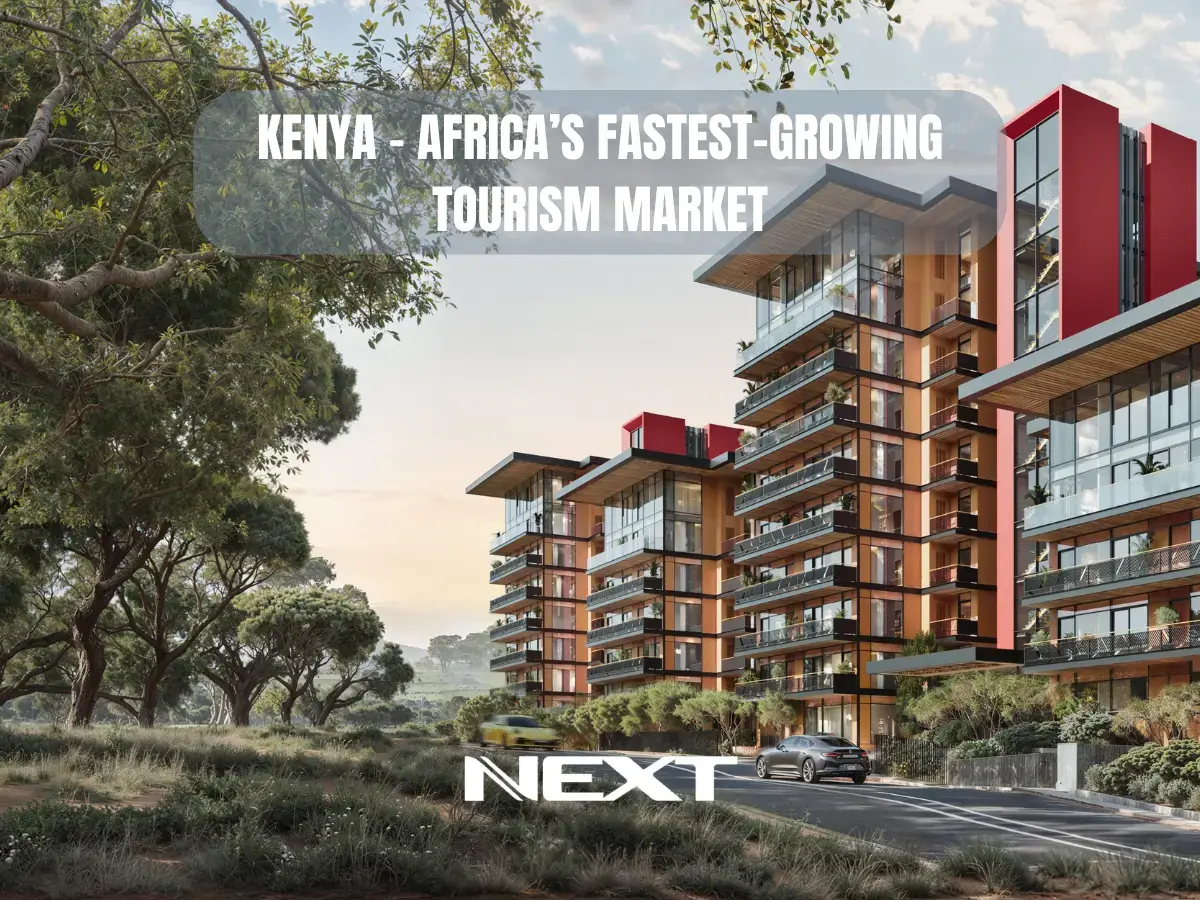
Kenya's Travel & Tourism sector contributed $12.7 billion to the economy in 2025, equal to 9.3% of GDP, according to new research from the World Travel & Tourism Council. For international buyers, these numbers describe exactly the kind of market NEXT looks for before it builds.
Tourism is no longer a side story in Kenya's economy, it is one of its main engines. The sector supported 1.8 million jobs last year, and the country welcomed 2.5 million international visitors, up 5.6% year-on-year, who spent $5 billion while in the country. That is a healthy, sustainable pace of growth - the kind that supports stable occupancy and rental demand rather than a short-lived spike.
WTTC also singles out Kenya as an emerging global leader in sustainable tourism. This matters commercially: eco-conscious travellers stay longer and spend more, and destinations that lead on sustainability attract premium hospitality brands and long-term capital.
The wider picture reinforces it. Africa's tourism sector is forecast to grow 5.4% in 2026, reaching $241 billion, placing the continent among the fastest-growing tourism regions in the world. For property investors, growth of this scale usually arrives in a familiar sequence: visitors first, then infrastructure, then international operators, then a repricing of well-located real estate.
NEXT Amani, our project in Tatu City, is built for a market where tourism, business travel and residential demand overlap. Buying into a market during its growth phase, rather than after it, is where the strongest returns have historically been made and Kenya's numbers suggest that phase is underway.
Source
Tourism is no longer a side story in Kenya's economy, it is one of its main engines. The sector supported 1.8 million jobs last year, and the country welcomed 2.5 million international visitors, up 5.6% year-on-year, who spent $5 billion while in the country. That is a healthy, sustainable pace of growth - the kind that supports stable occupancy and rental demand rather than a short-lived spike.
WTTC also singles out Kenya as an emerging global leader in sustainable tourism. This matters commercially: eco-conscious travellers stay longer and spend more, and destinations that lead on sustainability attract premium hospitality brands and long-term capital.
The wider picture reinforces it. Africa's tourism sector is forecast to grow 5.4% in 2026, reaching $241 billion, placing the continent among the fastest-growing tourism regions in the world. For property investors, growth of this scale usually arrives in a familiar sequence: visitors first, then infrastructure, then international operators, then a repricing of well-located real estate.
NEXT Amani, our project in Tatu City, is built for a market where tourism, business travel and residential demand overlap. Buying into a market during its growth phase, rather than after it, is where the strongest returns have historically been made and Kenya's numbers suggest that phase is underway.
Source